
Services
Complete Fiber Optic Installation
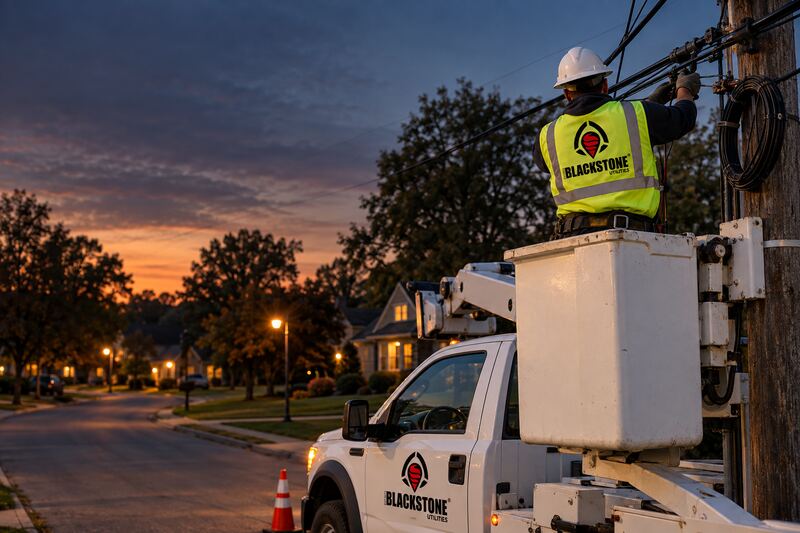
Complete fiber optic installation covers a fiber network from the route to the final splice. Across the Midwest and Southeast, Blackstone Utilities builds aerial and underground fiber, places conduit and innerduct by trenching or directional drilling, splices the cable, and maintains and repairs it, for broadband providers, their prime contractors and residential neighborhoods.
How is a fiber network built?
Fiber optic installation is the core of our work. We take on a single stage of a build or the whole job: aerial construction on poles, underground construction in conduit, directional drilling under drives and roads, splicing, and maintenance and troubleshooting once the network is live.
We work for internet service providers and fiber network owners, and for the prime contractors who build their networks, along main roads, into commercial sites and street by street through residential neighborhoods.
Complete Fiber Optic Installation
Aerial Construction
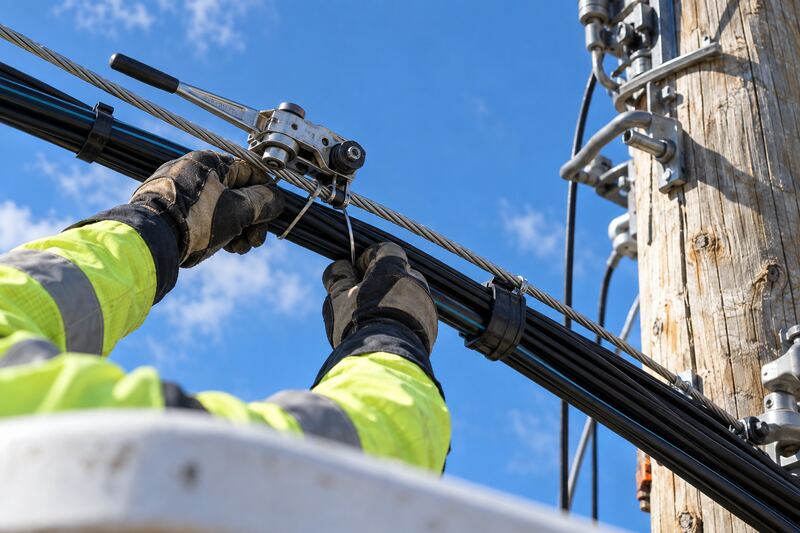
Aerial construction places fiber on utility poles. We place the support strand where the design needs it, lash the cable to it or hang self-supporting cable, fit the hardware at each pole and leave slack loops and storage where the design calls for them.
Pole work follows the pole owner's attachment terms and the make-ready in the design. Send the route drawings and the attachment details with your request, and we will scope the work pole by pole.
- Support strand and lashed cable
- Self-supporting cable where the design calls for it
- Pole hardware, slack loops and storage
Complete Fiber Optic Installation
Underground Construction
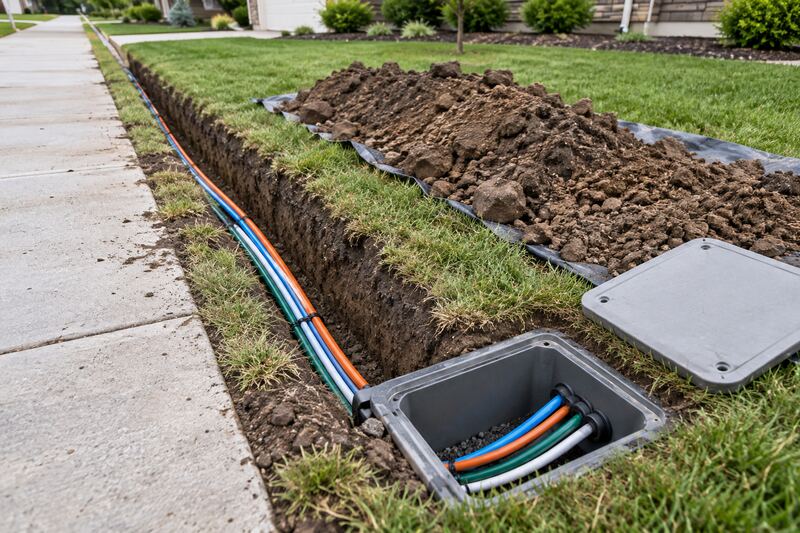
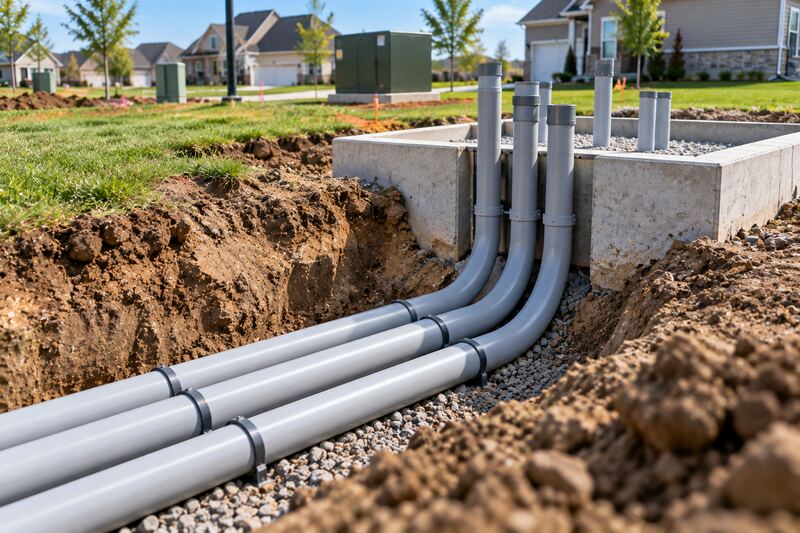
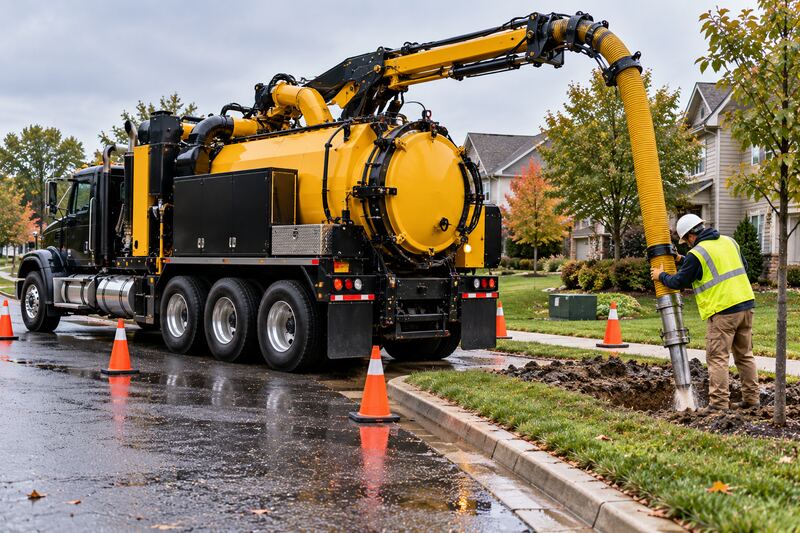
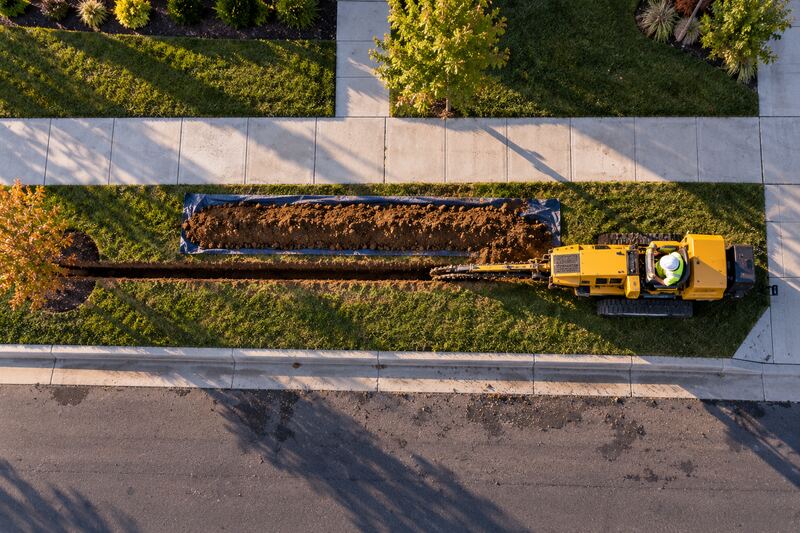
Underground construction puts fiber below ground in conduit. We trench or drill the route, place conduit and innerduct, set handholes and vaults at splice and access points, pull or blow in the cable and restore the ground.
In a residential neighborhood most of the route runs along the right-of-way, across lawns and under driveways. We open-cut where the ground can be opened and restored, and drill where drives, walks and landscaping should stay intact.
- Conduit and innerduct placement
- Handholes, vaults and pedestals
- Cable pulled or blown into conduit
- Lawns, walks and pavement restored
Complete Fiber Optic Installation
Splicing Services
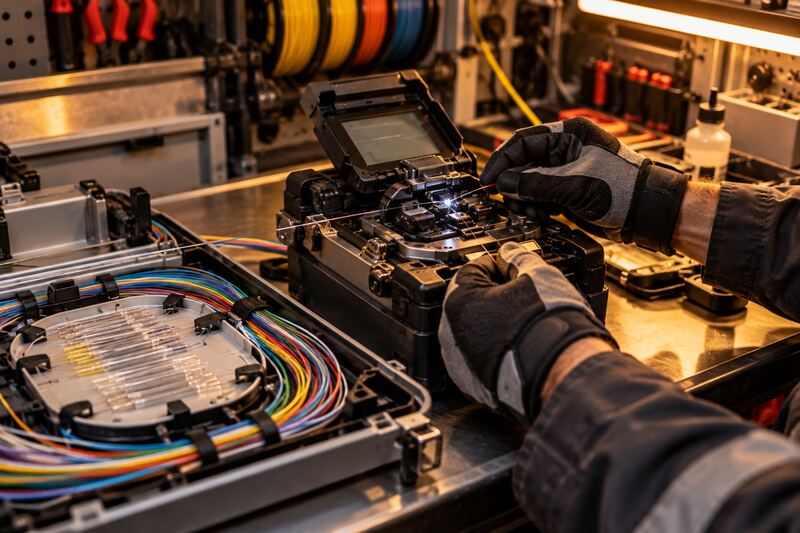
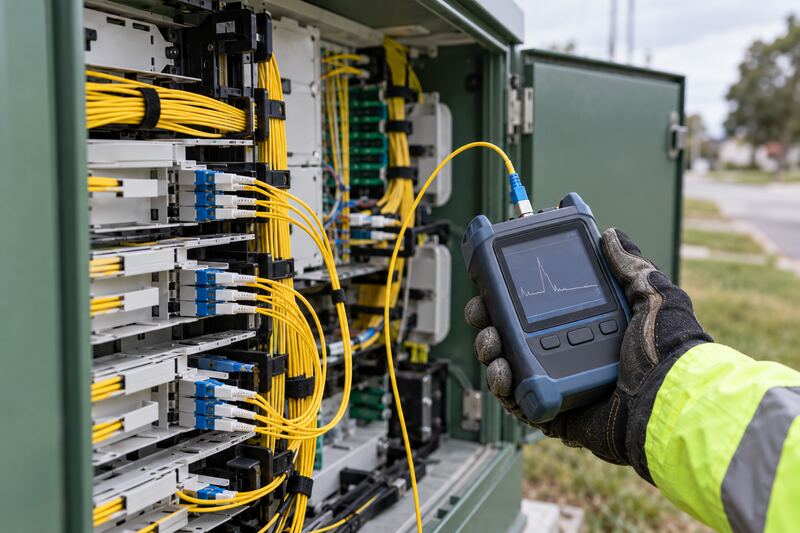
Splicing joins optical fibers so the signal passes with as little loss as possible. We fusion splice cables in closures, cabinets and pedestals, organize the fibers in splice trays and label everything to the splice documents.
Splices are tested once they are made, and the results go to the network owner with the splice records, so the next crew on the cable knows exactly what is in each closure.
- Fusion splicing in closures, cabinets and pedestals
- Splice trays, labels and splice records
- Splice loss testing
Complete Fiber Optic Installation
Maintenance & Troubleshooting
A live fiber network needs work when a cable is cut, damaged or losing signal. We trace the fault, reach or expose the damaged section, replace or re-splice it and test the restored fibers.
Maintenance also covers planned work: relocating cable for a road or site project, re-entering closures to add fibers for new connections and replacing damaged handholes, pedestals or cabinets.
- Fault tracing and cable repair
- Closure re-entry and re-splicing
- Cable relocation for road and site work
Complete Fiber Optic Installation
Directional Drilling
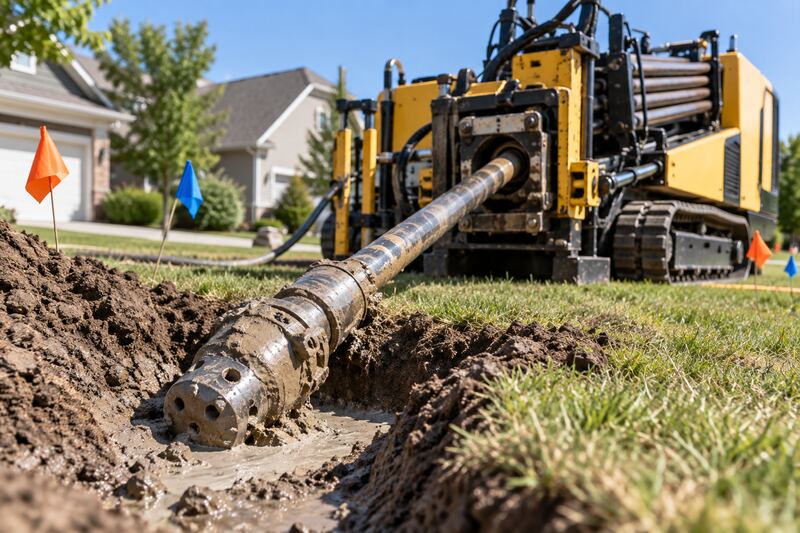
Directional drilling, also called horizontal directional drilling (HDD), places fiber conduit and innerduct under driveways, roads and landscaping without an open trench. The rig steers a pilot bore from an entry pit to an exit pit, reams it where needed and pulls the conduit, or a bundle of innerducts, back through it.
On a neighborhood fiber build, drilling keeps drives, walks and lawns intact and puts long runs between handholes in the ground with small pits at each end. Bore depth and clearance from gas, water and power lines follow the locates and the network owner's specifications.
- Conduit and innerduct bundles under drives, walks and roads
- Long runs between handholes with pits only at each end
Planning a fiber build
What to send for a quote
- Where the work is: the address, the area or the route.
- Which stages you need: aerial, underground, splicing, maintenance or the whole build.
- Route drawings, splice documents or the network owner's specifications.
- The number of homes or sites to connect, if you know it.
At a glance
- Service type
- Complete fiber optic installation
- Work
- Aerial, underground, splicing, maintenance, HDD
- Service area
- The Midwest and Southeast
- How to start
- Call us or request a quote
How we do the work
-
01
Locate
We request 811 locates and confirm the route, the poles and the existing utilities.
-
02
Build
We place strand and cable on poles, or conduit and innerduct by trenching or drilling.
-
03
Splice
We splice and test the fibers in closures, cabinets and pedestals to the splice documents.
-
04
Restore
We restore lawns, walks and pavement and hand over the splice and test records.
Questions about complete fiber optic installation
What does complete fiber optic installation include?
It includes everything needed to put a fiber network in service: aerial or underground construction, conduit and innerduct, directional drilling, splicing, and maintenance once the network is live. Blackstone Utilities takes on one stage or the whole build, for internet service providers, fiber network owners and the prime contractors who build their networks.
What is the difference between aerial and underground fiber?
Aerial fiber is lashed to a support strand or hung as self-supporting cable on utility poles. Underground fiber runs in buried conduit, placed by trenching or directional drilling, with handholes or vaults at access points. Pole work follows the pole owner's attachment terms and the make-ready in the design.
What is fiber splicing?
Fiber splicing joins two optical fibers so the signal passes with as little loss as possible. Fusion splicing melts the fiber ends together and is the standard method on network builds. We test splices once they are made and give the results to the network owner with the splice records.
Do you build fiber in residential neighborhoods?
Yes. We build fiber along neighborhood streets and to homes, drilling under driveways and walks where they should stay intact and restoring lawns and pavement when the work is done. Most of a neighborhood route runs along the right-of-way, across lawns and under driveways.
Is directional drilling used for fiber conduit?
Yes. Directional drilling, or HDD, is the usual way to place fiber conduit and innerduct under roads, driveways and landscaping without an open trench. The rig steers a pilot bore from an entry pit to an exit pit and pulls the conduit, or a bundle of innerducts, back through it.
What information do you need for a quote?
The location of the work, the route or the area of the build, a short description of the job and how to reach you. Mention any plans or dimensions in the description, and say whether the work is new or a repair. We follow up by phone or email.
Related services
We work across the Midwest and Southeast. See the service areas for the states and cities we serve.
Request a quote for complete fiber optic installation
Send the location and the scope, and we will follow up. Office hours: Mon-Fri 7:00 AM-7:00 PM CT.